



Mining
Mining Challenges
Mining sites expose network infrastructure to conditions that standard commercial equipment cannot reliably endure.
Harsh environments
Extreme temperatures, vibration, dust, moisture, and electromagnetic interference can shorten equipment life.
24/7 Operations
Round-the-clock production leaves little tolerance for network interruptions or slow recovery.
Distributed & Remote Sites
Open pits, underground workings, processing plants, and utilities create long distances and uneven coverage.
OT Cybersecurity Risks
Converged OT and IT systems increase the need for segmentation, secure access, and event visibility.
Remote maintenance
Distributed assets are difficult and costly to inspect, troubleshoot, service, and upgrade efficiently on site.
Network Design
A reliable mining network starts with the right architecture. Key considerations include redundancy, environmental conditions, bandwidth, cybersecurity, and centralized network management.
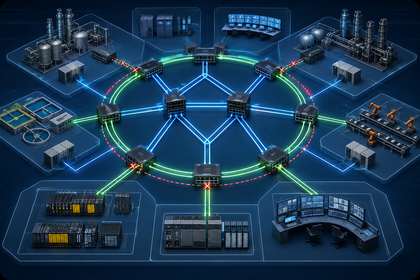
Topology & redundancy planning
Ring and mesh paths with sub-50ms failover should be validated across every production zone. Single-path connections to safety systems, PLCs, and dispatch consoles are not acceptable; redundant routing must be confirmed during the design phase, not discovered as a gap after commissioning.
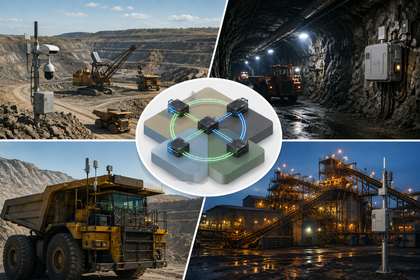
Environment-based zone classification
Divide the network into distinct deployment zones: surface, underground, vehicle-mounted, and processing plant. Each zone should have its own environmental specification. Applying a single uniform spec across all zones results in over-engineering in some areas and critical under-specification in others.
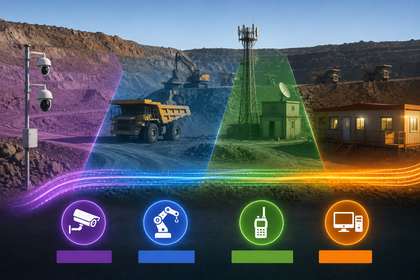
Traffic segmentation & bandwidth budgeting
Separate surveillance, automation, voice, and IT traffic into dedicated VLANs with QoS prioritization for control-plane data. Bandwidth planning must account for growth in camera resolution, sensor density, and autonomous vehicle data throughput across long-distance fiber and wireless segments.

Security architecture & OT/IT segmentation
Define security zone boundaries between OT and IT networks at the design stage. Authentication policies, access controls, and event logging requirements should be specified per zone and planned for integration with centralized monitoring before any equipment is deployed.
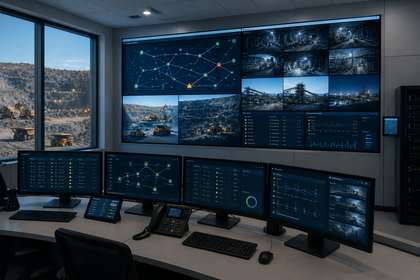
Centralized OAM & remote access design
Out-of-band management access to every network node must be reachable from a central location without requiring a site visit. Alarm aggregation, topology mapping, and remote diagnostics should be architecturally guaranteed, particularly for underground and distributed surface equipment.
Equipment Criteria
Evaluate equipment by the technical specifications and functions required for each mining deployment.
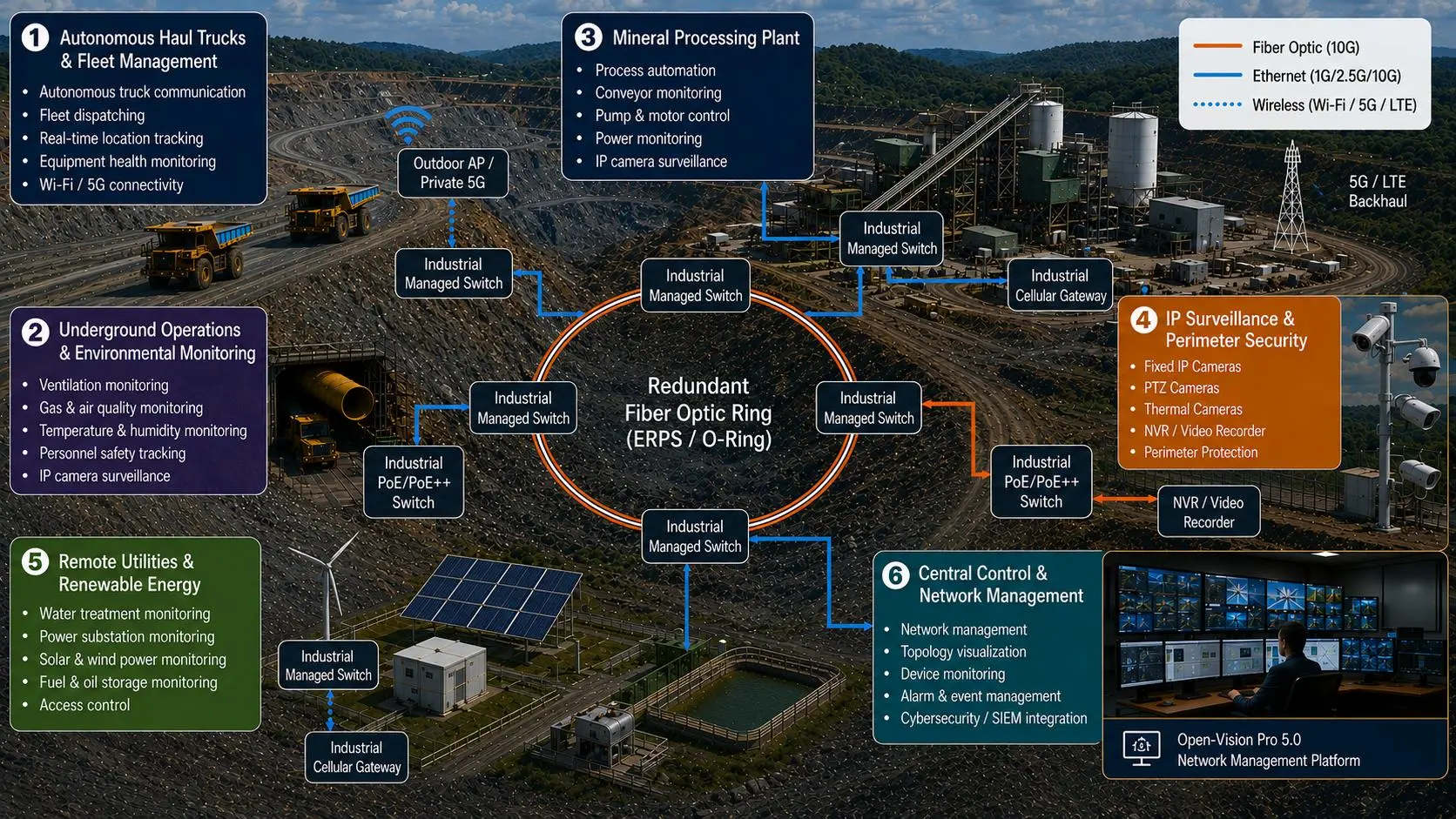
Complete Mining Network Architecture
The application view illustrates how autonomous haulage, underground operations, mineral processing, IP surveillance, remote utilities, and the central control center can be connected through a resilient industrial network.
Why ORing
ORing combines rugged industrial hardware, resilient networking technologies, secure connectivity, and centralized management for distributed mining environments.
Wide operating temperatures, fanless construction, vibration resistance, flexible power input, and ingress protection for harsh sites.
O-Ring, O-Chain, ERPS, RSTP/MSTP, link aggregation, and redundant power help reduce downtime.
Gigabit, 2.5G/10G, fiber, SFP, PoE, industrial wireless, and cellular connectivity across the mine.
HTTPS, SSH, SNMPv3, IEEE 802.1X, ACLs, account policies, and event logging help protect OT networks.
Device discovery, topology mapping, diagnostics, alarms, VLAN, and QoS simplify network monitoring and management.
Industrial-grade products are designed to meet relevant standards for demanding applications and deployment environments.
Application-focused planning and technical support help speed deployment and ongoing maintenance.
Recommended Products
Managed PoE Switch
Cyber-hardened Gigabit PoE switching with fiber uplinks for rugged industrial networks.
Rack-Mount Managed
PoE Switch
High-port-count Gigabit PoE
switching for centralized
aggregation and industrial
backbone applications.
Industrial PoE++
Switch
Multi-Gigabit and 10G connectivity with high-power PoE++ for demanding edge devices.
Industrial Wi-Fi 5
Access Point
Dual-band industrial wireless access with four Gigabit Ethernet ports for flexible field connectivity.
Industrial Network
Management
Centralized visibility for network health, alarms, topology, traffic, and security events.
Proven in the Field
Zijinshan Gold & Copper Mine
ORing industrial switches connected safety and operational subsystems through a resilient Gigabit backbone, with centralized visibility provided by Open‑Vision.
Read MoreGold Mine IP Surveillance
A rugged PoE and fiber network connected distributed IP cameras across a large mining site for reliable video transmission and simplified deployment.
Read More